Invited Talks

Post-Training Policies without Post-Training
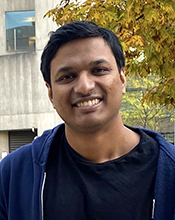
Abstract. Traditionally, policy training pipelines are split into two phases: a pre-training phase, that instills generalization, and a post-training phase, that tunes for maximum performance. The best post-trained policies are often created through skillful data curation, which discards a large fraction of the available training data and leaves a lot of robustness on the table. In this talk, I will discuss our recent work on achieving post-training performance without post-training in the pi07 model. Through careful conditioning of the pre-training process, we can train policies that match the performance of our best post-training pipelines, while retaining the full generality of the pre-training process.
Bio. Karl Pertsch is a member of the technical staff at Physical Intelligence. Before, he was a postdoc at UC Berkeley and Stanford, and obtained his PhD from USC. His work focuses on building generalist robot policies that can solve a wide range of physical manipulation tasks in the real world. His work has been awarded the Best Conference Paper Award at ICRA'24, two Outstanding Paper Awards Finalists at CoRL'24, and a Best Paper Finalist at RSS'25.
What can simulation do for robotic post-training?
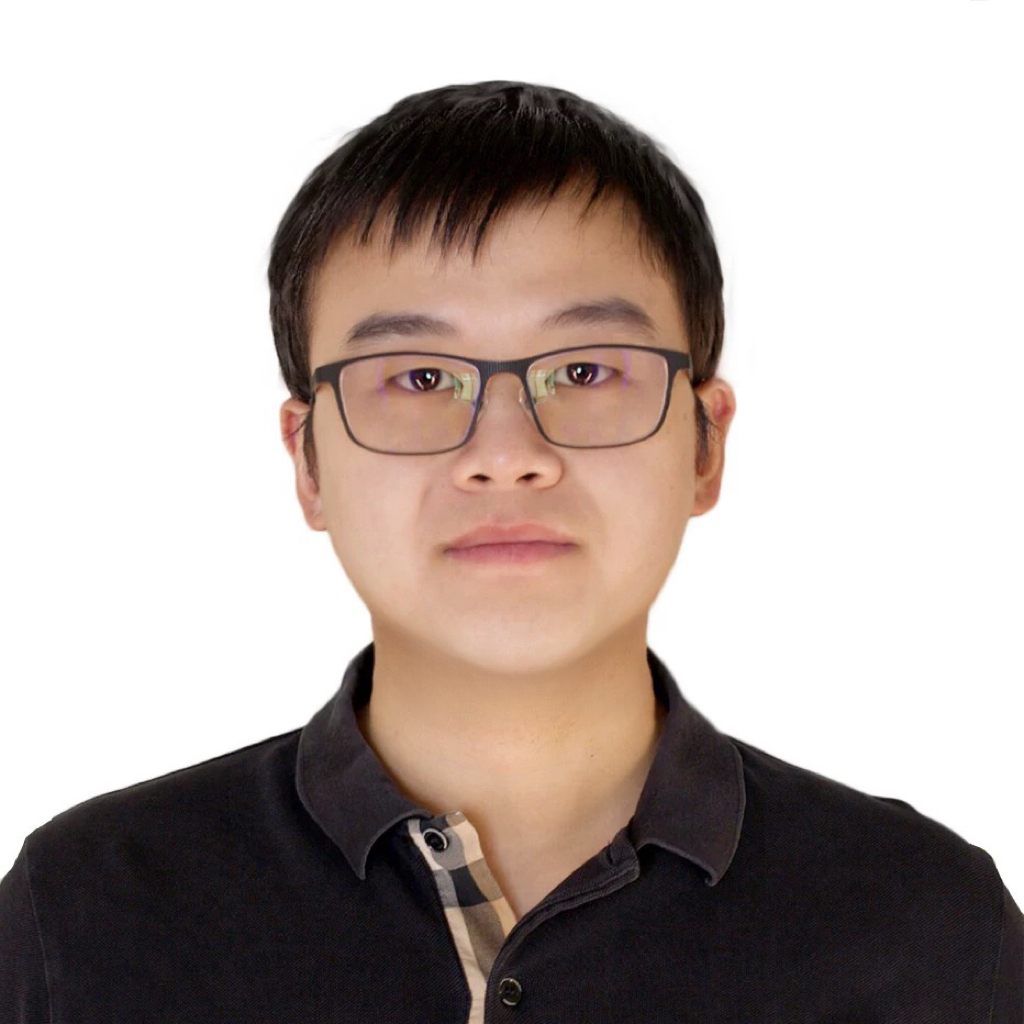
Abstract. Robotic post-training via reinforcement learning, while promising, has yet to see the same success that has been observed in domains like large language modeling. There is a considerable difference in assumptions in post-training between the robotics and language domains, making many standard RL algorithms ineffective. We posit that using simulation for post-training in a real-to-sim-to-real loop can bridge this gap, allowing for cheap, fast data collection for post-training. But the use of simulation for post-training must contend with the inevitable gap between imperfect simulation and reality, both from real-to-sim and from sim-to-real. We will present a simple way to bridge this gap, enabling post-training via RL to significantly improve the success rate, throughput and robustness of robotic foundation models. We will end with broader perspectives on the role of simulation in post-training of generalist robotic policies.
Bio. Abhishek Gupta is an assistant professor in the Paul G. Allen School of Computer Science and Engineering at the University of Washington since 2022. He leads the Washington Embodied Intelligence and Robotics Development lab focusing on robot learning and reinforcement learning. Previously, he was a postdoctoral scholar at MIT, collaborating with Russ Tedrake and Pulkit Agrawal. Prior to that he received his Ph.D. and B.S. degrees from UC Berkeley, working with Sergey Levine and Pieter Abbeel. Abhishek is the recipient of the IEEE RAS Early Career Award, the Toyota Research Institute Young Investigator award and an Amazon Science Hub award, along with award nominations at several top conferences and workshops. His research interests lie in scalable reinforcement learning methods for robot learning, in particular methods for continual adaptation in the real world.
Robotic Foundation Models That Learn While Deploying
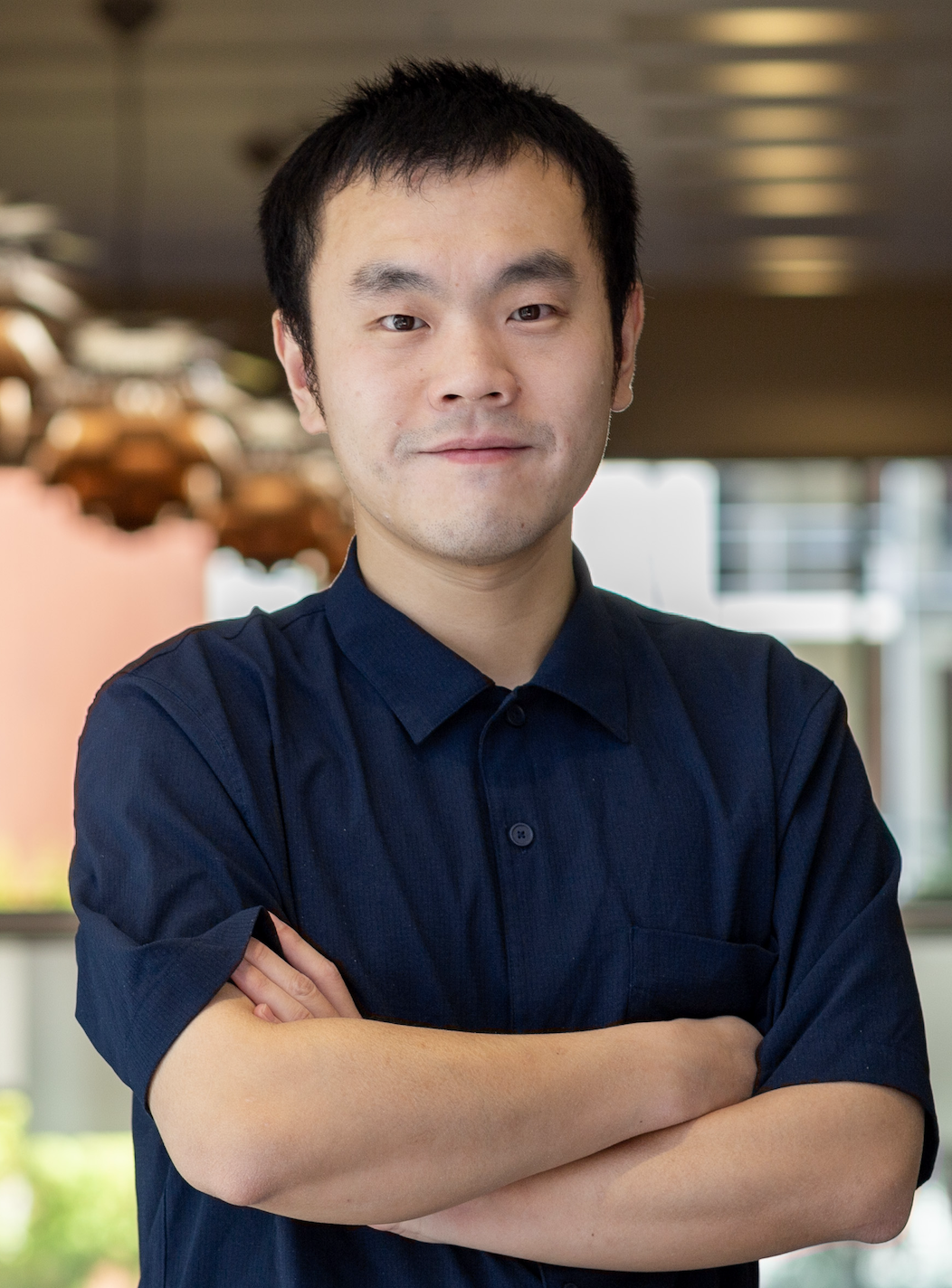
Abstract. Robotic foundation models are emerging as a scalable path toward generalist robots. Large-scale pretraining provides the foundation for broad representations and initial capabilities, while post-training on real-world deployment experience refines and expands these capabilities toward reliable operation. In this talk, I will present a closed-loop approach to physical AI through two complementary efforts. First, I will introduce tau-0, an open-source robot foundation model trained on diverse robot and non-robot data to learn predictive representations of physical interactions. Second, I will discuss Learning While Deploying, a framework that turns deployment into a continual post-training process, converting real-world successes and failures into policy improvement through real-world learning. Together, these components form a data flywheel for physical AI: pretrain from large-scale diverse data, deploy in real environments, learn from interaction, and continuously improve robot capabilities through real-world experience.
Bio. Jianlan Luo is an Associate Professor at the Shanghai Innovation Institute and Chief Scientist at AGIBOT. He received his Ph.D. from the University of California, Berkeley. After completing his Ph.D., he worked as a researcher at Google before returning to UC Berkeley as a postdoctoral scholar. His research focuses on building principled and scalable robotic learning systems that enable reliable, high-performance behavior in complex real-world environments. His work has been recognized by honors including MIT Technology Review's TR35 China, and has been featured in media outlets including WIRED, TechCrunch and more.
July 13, 2026 · 8:30 – 12:30 (Sydney time, AEST)
| Time | Event |
|---|---|
| 8:30 - 8:40 | Opening Remarks |
| 8:40 - 9:10 | Invited Talk 1 · Karl Pertsch |
| 9:10 - 9:40 | Invited Talk 2 · Abhishek Gupta |
| 9:40 - 10:10 | Invited Talk 3 · Jianlan Luo |
| 10:10 - 10:40 | Coffee Chat & Sponsor Showcase |
| 10:40 - 11:40 | Participating Team Presentations |
| 11:40 - 12:10 | Panel Discussion & Audience Q&A |
| 12:10 - 12:30 | Closing & Summary |
Discussion topics for this workshop include, but are not limited to:










If you use this dataset or reference the challenge in your research, please cite us:
@misc{posttraining_robotics_2026,
  title        = {Post-Training for Robotics Foundation Models Dataset and Challenge},
  author       = {Zhang, Shiduo and Wang, Yue and Chang, Haonan and Zhao, Hang and
                  Liu, Yicheng and Guizilini, Vitor and Bobu, Andreea and Wagenmaker, Andrew and
                  Dixit, Anushri and Yu, Chao and Shah, Dhruv and Simchowitz, Max},
  year         = {2026},
  howpublished = {RSS 2026 Workshop & Challenge},
  url          = {https://posttraining-for-robotics.github.io}
}For any questions about the workshop or the challenge, please reach out to:
Shiduo Zhang · sdzhang23@m.fudan.edu.cn